
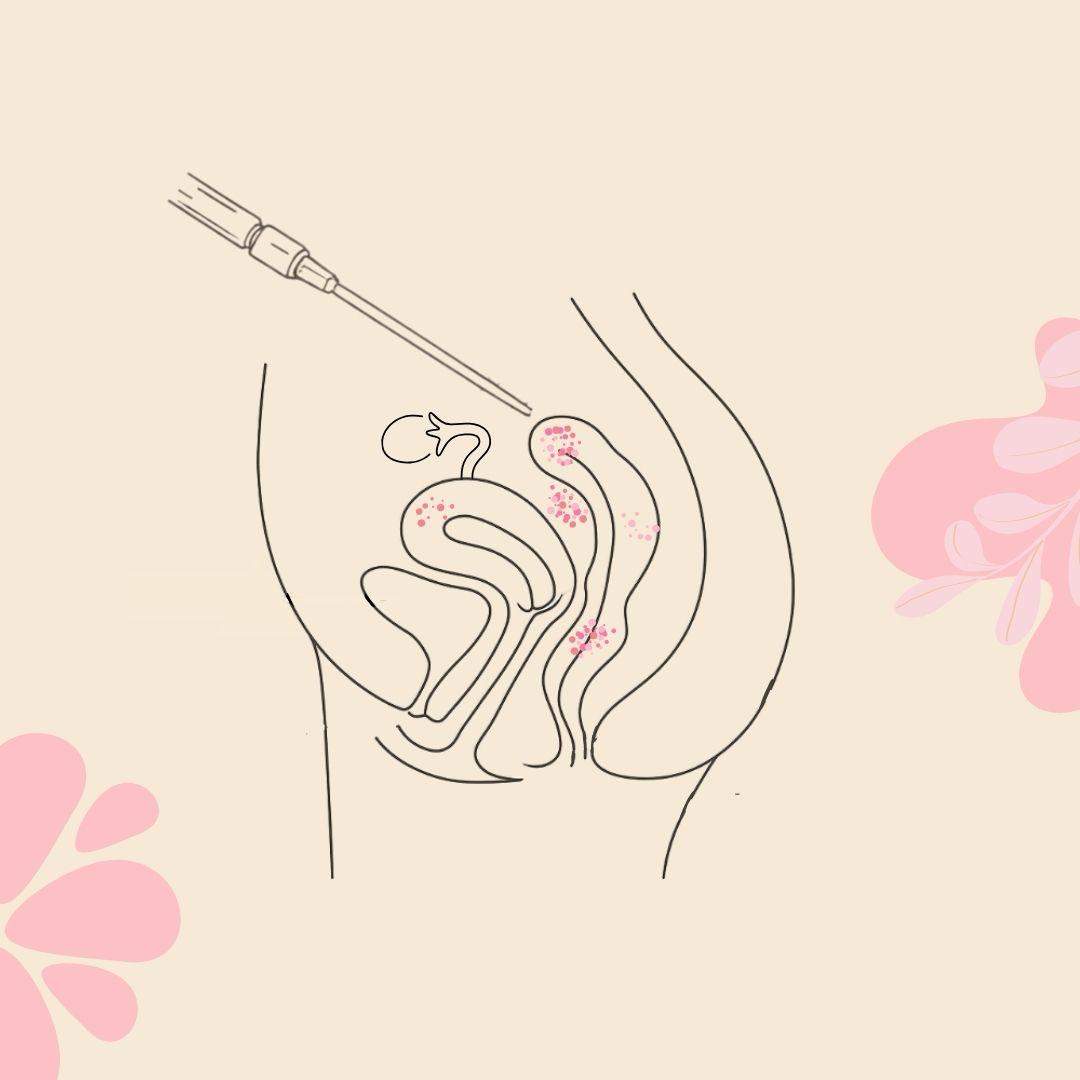
Most people think of endometriosis as a gynaecological condition affecting the uterus and ovaries. But for some patients — particularly those with more advanced, “deep”, or stage IV endometriosis — the disease can involve nearby organs, including the bowel. This is when a colorectal surgeon (such as Maven Centre’s Dr Fiona Reid) becomes an integral part of the care team.
In this blog, we explain why bowel endometriosis occurs, what symptoms it causes, how it’s diagnosed, and why collaborative surgery between an advanced laparoscopic gynaecologist and a skilled colorectal surgeon can significantly improve outcomes.
What Is Bowel Endometriosis?
Endometriosis occurs when tissue similar to the lining of the uterus grows outside the uterus. In more severe forms (called deep infiltrating endometriosis, or DIE), the endometriosis tissue penetrates deeper structures within the pelvis. The bowel is one of the most commonly affected organs in severe disease. Studies suggest the bowel may be involved approximately 10% of endometriosis patients, most often affecting the rectum and sigmoid colon. These endometriotic nodules can distort pelvic anatomy and affect how the bowel functions.
Why Does a Colorectal Surgeon Get Involved?
Most cases of mild-to-moderate endometriosis can be treated by a gynaecologist alone. And some severe endometriosis can be managed surgically by advanced laparoscopic gynaecologists, such as Maven Centre’s Dr Sneha Parghi and Dr Alison Bryant-Smith. However, when endometriosis affects the bowel wall, removing it safely may require specialised bowel surgery by a colorectal surgeon.
This is because the goals of surgery are not only to remove endometriosis, but also to:
- Optimise bowel function and minimise bowel symptoms
- Minimise surgical complications (such as anastomotic leakage, or fistula formation)
- Reduce recurrence of bowel endometriosis
- Exclude or treat other bowel conditions that might be contributing to bowel symptoms
In complex disease, surgery is safest when performed by a team. Multidisciplinary laparoscopic treatment is considered the highest standard of care for bowel endometriosis.
A helpful way to think about it is that:
- Your advanced laparoscopic gynaecologist will remove endometriosis from reproductive organs (such as the ovaries), and the peritoneum (the cell layer lining the inside of your abdomen and pelvis)
- Your colorectal surgeon will perform the relevant bowel surgery to remove endometriosis from the bowel and restore bowel function safely afterwards
Symptoms of Bowel Endometriosis
Symptoms often overlap with common gastrointestinal conditions, which is why diagnosis can be delayed. Possible symptoms of bowel endometriosis include:
- Painful bowel movements (especially during periods)
- Constipation or diarrhoea, especially if there is a predictable pattern to your bowel habit based on where you are in your menstrual cycle (eg. normal bowel habit most of the month, constipation leading up to your period, then diarrhoea during your period)
- Bloating
- Shooting rectal pain, or a sense of rectal pressure
- Cyclical rectal bleeding (ie. that only occurs during your period)
- Pain during intercourse
- Severe pelvic pain
Many patients are initially diagnosed with irritable bowel syndrome (IBS), before the true cause is identified. Importantly, symptoms often worsen around menstruation — a key clue suggesting endometriosis, rather than a primary bowel disorder (such as IBS).
How Is Bowel Endometriosis Diagnosed?
Diagnosis starts with suspicion. If symptoms suggest deep endometriosis, your gynaecologist may organise additional imaging to ‘map’ the disease before surgery. This helps determine whether a colorectal surgeon needs to be involved. Investigations may include:
- A transvaginal ultrasound by a specialist women’s ultrasound company, specifically looking for deeply infiltrative endometriosis (‘DIE’)
- MRI scan of your pelvis
- Occasionally specialised bowel imaging
Specialist transvaginal ultrasound and MRI are highly accurate in identifying bowel involvement and help guide surgical planning.
Planning Surgery: Why Teamwork Matters
If you have bowel symptoms, your colorectal surgeon is likely to recommend a colonoscopy pre-operatively. This helps to determine: if your endometriosis has grown through from your pelvis to the inside lining of your bowel; if any endometriotic nodules are compressing your bowel from the outside in; if you have any other bowel conditions that may be contributing to your symptoms.
Before surgery, your multidisciplinary team uses all the available information (from imaging +/- colonoscopy) to determine:
- Which part of your bowel is affected (ie. the rectal height or sigmoid involvement)
- How deeply the endometriosis infiltrates into the bowel wall
- How much of the bowel wall is affected (ie. how big the bowel nodule is)
- Whether or not the bowel lumen is narrowed
- What type of bowel surgery may be required, keeping in mind that multidisciplinary surgery for bowel endometriosis aims to not only restore normal anatomy, but also to optimise bowel function and symptoms
- What your current bowel function is like and how it may be impacted
- What degree of scar tissue may be present, and how it may affect surgery
Careful planning allows the procedure to be completed safely in one procedure, rather than multiple staged operations.
What Does the Colorectal Surgeon Actually Do?
Not all bowel endometriosis requires bowel removal. There are three main surgical approaches: a ‘bowel shave’; ‘disc excision’; or ‘segmental resection’.
Bowel shaving
The endometriosis is peeled off the bowel surface without entering the bowel. This is best for shallow endometriotic nodules, that are lightly attached to the bowel wall.
Disc excision
This is for isolated, deeper bowel nodules, and involves a small disc-shaped part of your bowel being completely cut out and removed, and the bowel above and below this section between connected again.
Segmental resection
This is only needed if you have: larger and / or several bowel nodules, and / or there is significant narrowing of the bowel due to your endometriosis. During a segmental resection, a larger section of bowel is removed, and the ends are joined up again.
Choosing the appropriate surgical approach requires the expertise of a colorectal surgeon such as Dr Fiona Reid. Decision-making is individualised, based on the endometriotic nodule’s size, location, depth, your symptoms, and your treatment goals. That’s why it’s so important that you meet Dr Reid prior to your operation, to make sure we’re all on the same page, and can align our surgical management with your treatment goals.
Is Bowel Surgery Dangerous?
All surgery carries risk, and (generally) the more complex the surgery, the higher the risk involved. Expert, experienced teams such as ours are known to have fewer complications than less-experienced groups.
Major complications (such as leakage from the site where the bowel was joined back together occurs in approximately 4-7% of patients, formation of a fistula or channel between the bowel and vagina) occur in a very small percentage of cases (4% of patients). Changes in the function of the bowel are extremely common after rectal surgery and depend on the size and ‘height from the anus’ of the surgery. Major changes that affect quality of life are less common (20%) and can usually be manged with medication and lifestyle.
There is a very small chance that your colorectal surgeon may need to create a stoma during your operation: a small hole in your abdominal wall that allows faeces to exit, directly into a bag. This stoma may be temporary (ie. you can have another operation down the track to reverse this, and remove the stoma) or permanent. For many patients undergoing bowel surgery for endometriosis, this is their main concern. Consulting with Dr Reid prior to your planned operation will provide you with the opportunity to ask any questions you have, and for Dr Reid to counsel you regarding the risks of such outcomes.
Will It Help My Symptoms?
In appropriately selected patients with bowel endometriosis, combined surgery by a colorectal surgeon and an advanced gynaecological surgeon can provide substantial improvements in:
- Pelvic pain
- Painful periods
- Painful bowel motions
- Painful intercourse
- Quality of life
Studies consistently show improvement in both gynaecological and bowel symptoms after multidisciplinary surgery by expert surgeons.
What About Fertility?
Many patients worry bowel surgery may worsen fertility. In reality, the opposite is often true. By restoring normal pelvic anatomy and removing inflammatory disease, surgery may improve the chance of conception. Pregnancy rates after bowel surgery for endometriosis are reported to be approximately around 25 – 60%. Your care team will individualise treatment depending on whether or not fertility is a priority of yours.
Recovery After Surgery
What your expected recovery will look like depends a lot on the extent of the bowel surgery needed on the day. Typical expectations include that:
- Bowel shaving: discharge from hospital the day after your operation. Return to normal activities within 3 – 4 weeks
- Disc excision or segmental resection: stay in hospital for 1 – 4 nights, and return to normal activities within 4 – 6 weeks
- Segmental resection: stay in hospital 1-4 nights and return to normal activities within 4 – 6 weeks
- If a stoma is required: stay in hospital until you are confident managing the stoma (2 – 5 days), return to normal activities 4-6 weeks but avoid heavy lifting until the stoma is reversed. Your diet may need to be modified, depending on the type of stoma
Why Specialised Referral Matters
Severe endometriosis is one of the few benign conditions where the complexity of surgery rivals cancer surgery (ie. complex!). For this reason, referral to experienced centres such as Maven Centre is recommended when bowel involvement is suspected. Operating without the appropriate multidisciplinary surgical team may increase complications or leave endometriosis behind.
Final Thoughts
Severe endometriosis is not “just bad periods” — it can involve multiple organs and often requires specialised care. When the bowel is affected, expert collaboration between an experienced gynaecologist and colorectal surgeon allows for:
- Safer surgery
- More complete disease removal
- Better symptom relief
- Preservation of organ function
- Improved fertility outcomes (if relevant)
If you experience cyclical bowel symptoms, severe pelvic pain, or have been told your endometriosis may involve the bowel, speak with your women’s health GP or gynaecologist. Early referral to a specialist multi-disciplinary team such as Maven Centre can make a significant difference in both recovery and long-term quality of life.